FAQ
Q: What is the difference between A2-s1,d0 and B-s1,d0 fire classification?
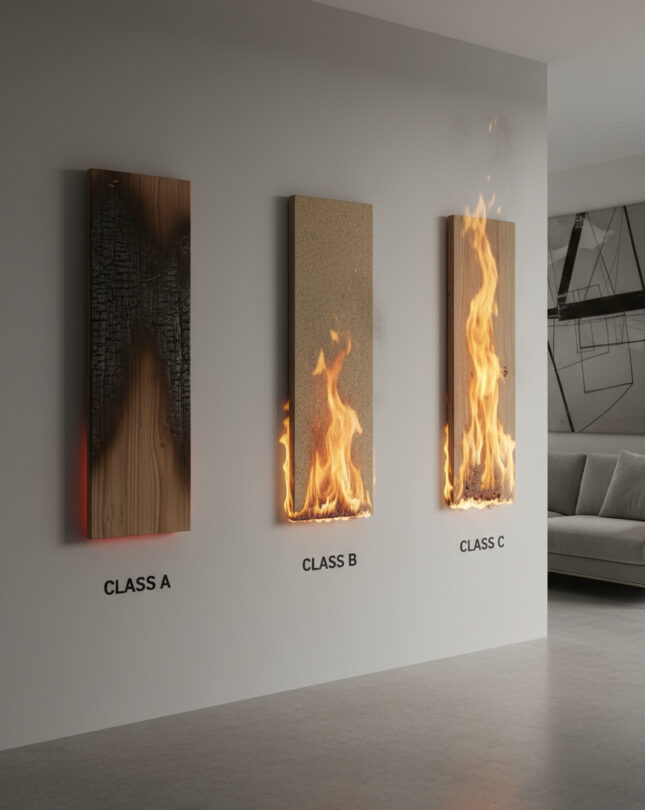
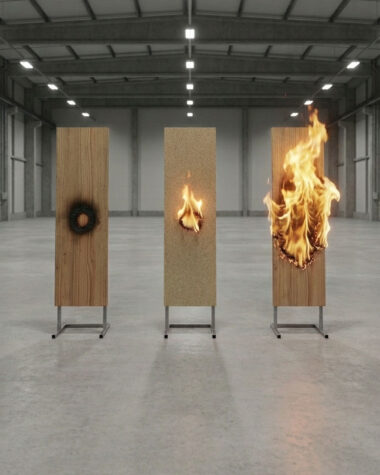
A: Both classifications appear on Gustafs products, and the difference matters when you’re specifying for a regulated environment. A2-s1,d0 means the product is virtually non-combustible – it does not meaningfully contribute to fire development. This is achieved by the Gustafs fibre-gypsum core, which is inherently non-combustible regardless of the wood veneer on its surface. B-s1,d0 means the product has very limited combustibility – it will burn under sustained flame exposure, but produces minimal smoke (s1) and no flaming droplets or particles (d0). In both cases, the suffix s1,d0 represents the best possible ratings for smoke and droplets. The primary difference is in the core: A2 products use fibre-gypsum, B-class products may use fire-retardant improved MDF or plywood. For healthcare, education, public buildings and residential above 18 metres, A2 is typically required. For standard offices, retail and hospitality, B-s1,d0 is sufficient.
Q: Can wood panels really achieve A2 fire classification?
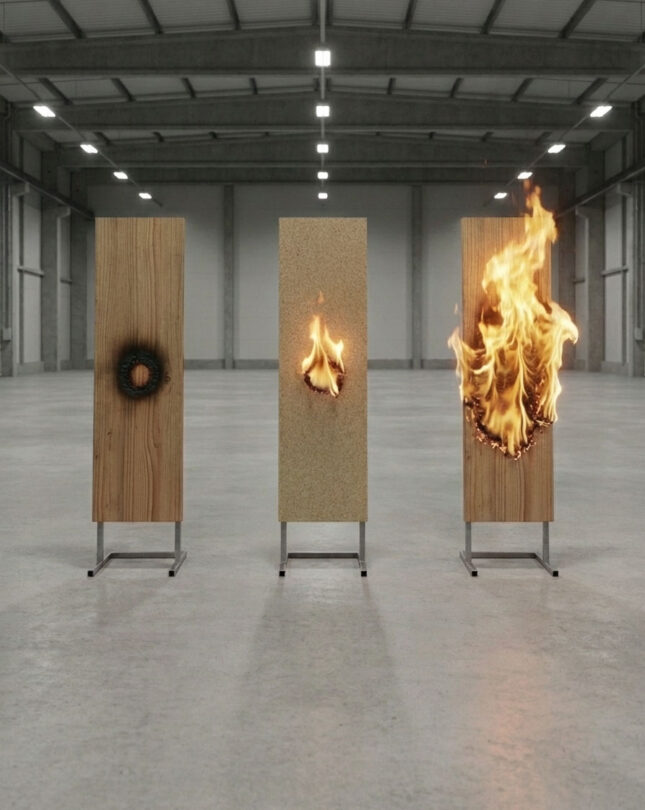
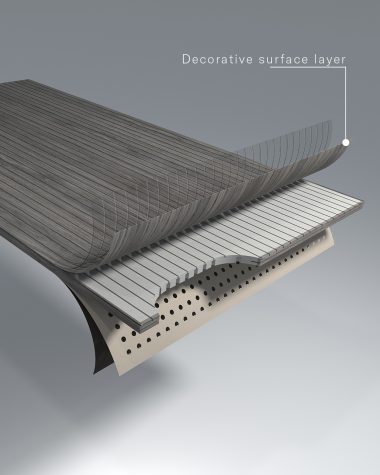
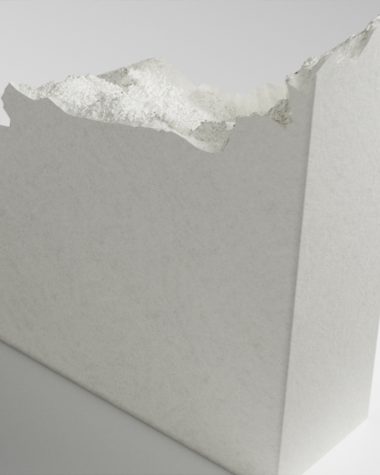
A: Yes- when the product is designed correctly from the inside out. Most wood products on the market achieve their fire rating by treating the surface or substrate with chemical retardants. Gustafs takes a different approach: our panels and cladding use a fibre-gypsum core that is non-combustible by composition. A thin layer of real wood veneer is bonded to this core, and the result is a product classified A2-s1,d0 across the entire product – not just at the surface. The classification is verified through European testing under EN 13501-1 and documented with a Declaration of Performance (DoP). Gustafs Panel System with fibre-gypsum core achieves A2-s1,d0. Gustafs Linear Plank with fibre-gypsum core also achieves A2-s1,d0.
Q: What is the difference between fire retardant and non-combustible wood?
A: Fire retardant wood has been chemically treated – through impregnation or surface lacquer – to slow the rate at which it burns. It is still a combustible material; the treatment delays its contribution to fire. Non-combustible means the product does not sustain combustion at all, because its core material is inherently inert. Gustafs fibre-gypsum core products are non-combustible in this true sense. Fire retardant treatments can degrade over time, may emit fumes during a fire event, and are only as reliable as the quality and longevity of the treatment applied. For high-risk or long-life buildings, non-combustible classification offers a more robust long-term guarantee.
Q: Which Gustafs products are A2-s1,d0 classified?
A: The following Gustafs products achieve A2-s1,d0 when specified with the fibre-gypsum core:
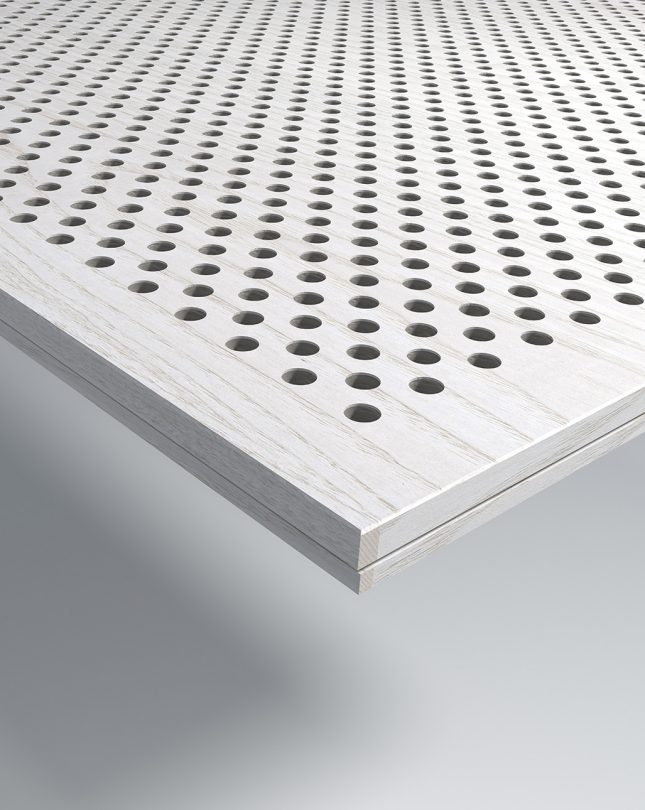
Gustafs Panel System with fibre-gypsum core – A2-s1,d0. This covers the full range of wall and ceiling panels, including all standard and slot perforated variants. Note: Nano perforated panels achieve B-s1,d0.
Gustafs Linear Plank with fibre-gypsum core – A2-s1,d0.
Gustafs Linear Rib with fibre-gypsum core achieves B-s1,d0. For Rib products specified with fire-retardant improved MDF, classification is also B-s1,d0.
Gustafs Feltfon felt panels are classified B-s1,d0.
Important: classification depends on the core material specified. Always confirm core type when ordering for fire-critical projects. Download the full Gustafs fire classification document for product-by-product detail, or contact your local representative for specification support.
Q: Which fire classification do I need for my project?
A: This depends on building type, occupancy, and height. As a practical guide:
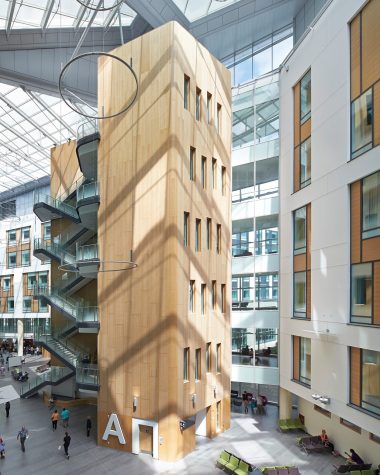
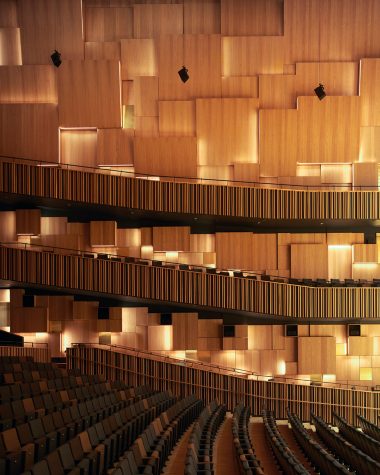
A2-s1,d0 is typically required for hospitals and healthcare facilities, schools, universities and educational buildings, theatres, concert halls and cultural institutions, public transport infrastructure, and residential buildings above 18 metres (UK Building Regulations Part B; requirements vary by country across the EU).
B-s1,d0 is typically sufficient for standard commercial offices, retail interiors, hotels and hospitality, and low-rise residential common areas.
If your project involves a mix of uses, or if a fire engineer or building control officer has flagged elevated requirements, specify A2. When in doubt, A2 is always the safer specification — and with Gustafs, it does not require any compromise on aesthetics or acoustic performance.
Q: Are Gustafs products compliant with UK Building Regulations Part B?
A: Yes. Gustafs Panel System and Linear Plank products with fibre-gypsum core are classified A2-s1,d0, which meets the requirements of UK Building Regulations Part B for walls and ceilings in high-risk occupancies – including healthcare, education, and residential buildings above 18 metres where Class A2 or better is required. Gustafs can supply CE marking and Declaration of Performance (DoP) documents to support the specification and building control process. Contact your local UK representative for project-specific documentation.
Q: Are timber slats and linear wood ceilings allowed in buildings with strict fire requirements?
A: Yes, when the right product is specified. Standard timber slats and linear profiles made from untreated solid wood or standard MDF will typically fall into Class D or below, which excludes them from fire-critical environments. Gustafs Linear Rib with fibre-gypsum core is classified B-s1,d0, making it suitable for standard commercial interiors. For the highest fire demands – hospitals, schools, public buildings – specify Gustafs Panels or Linear Plank with fibre-gypsum core, which achieve A2-s1,d0. The visual result is the same: a natural wood interior with real veneer. The difference is entirely in the core.
Q: What does s1 and d0 mean in a fire classification?
A: The suffix after the main class letter describes smoke and droplet behaviour. s1 means the product produces minimal or insignificant smoke when exposed to fire – the best possible rating for smoke contribution. d0 means the product produces no flaming droplets or particles when subjected to fire – again the best possible rating. So a product classified A2-s1,d0 is virtually non-combustible, produces minimal smoke, and creates no flaming droplets. All Gustafs products with fibre-gypsum core carry the s1,d0 suffix, which is particularly important in occupied buildings where smoke inhalation and fire spread via droplets are primary life-safety concerns.
Q: How do I get fire classification documentation for a project specification?
A: Gustafs provides full documentation for specification purposes, including the complete fire classification table covering all products and core variants, CE marking and Declaration of Performance (DoP) documents, and resistance to fire documentation where applicable. Download directly from the Knowledge Hub, or contact your local Gustafs representative for project-specific support. For international projects, Gustafs products have been delivered to over 50 countries – your representative can advise on local regulatory requirements.